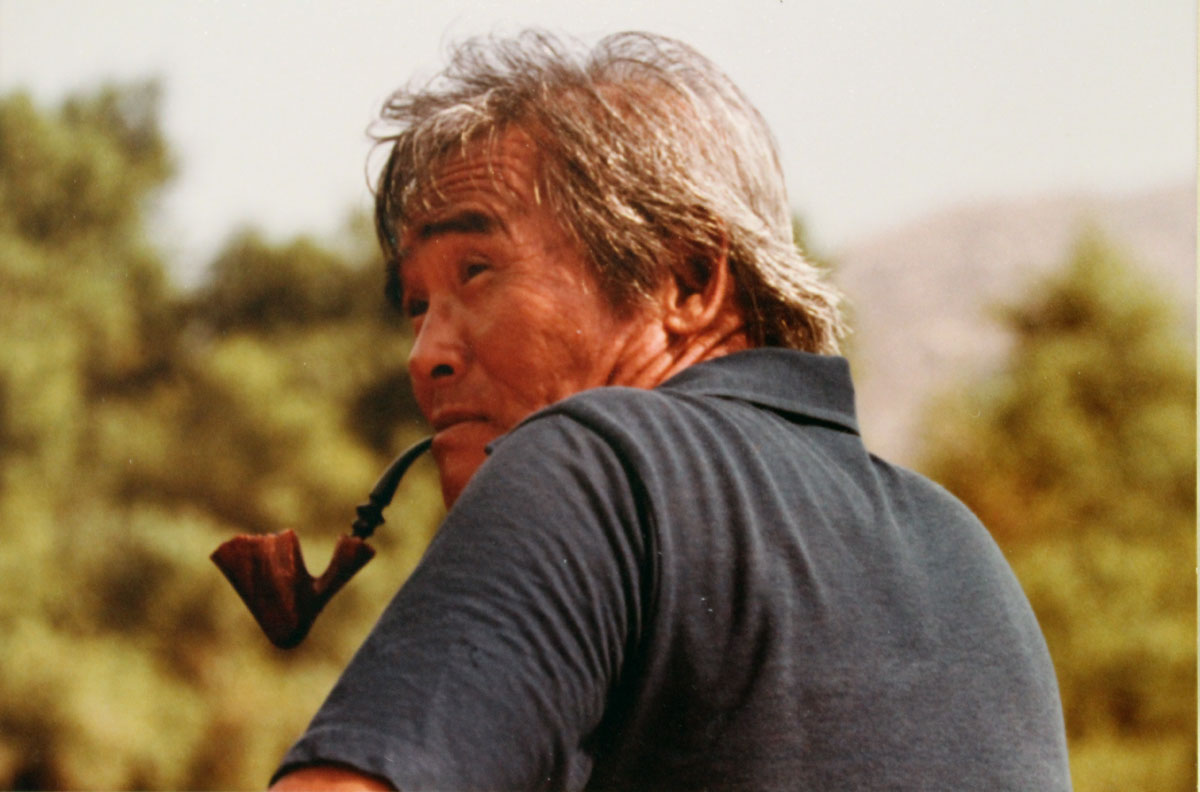
Mom, Cheryl, Kathy, Derrick and I stood silently huddled around Dad’s bedside while the sound of spattering raindrops splashed on the rooftop overhead.
“Isn’t my family beautiful?” he said to the nurse as she walked in.
“Yes they are,” said the nurse.
“I am a fortunate man to have such a beautiful family,” Dad said softly.
Dad looked so small and thin, lying in that bed in the cold sterile hospital room. His face was pale and grey. It pained my heart to see him that way. The Dad I knew was strong, bold and mighty.
He glanced around the room at each one of us, then said, “Mom is a good woman. I am lucky to have such a good woman.”
My eyes began to blur with a salty warm pool of tears as I stood at his bedside. The rain continued to pound on the rooftop above. I could hear the soft muffled sobs of my sisters and brother as we watched his chest slowly moving for the next several days. Dad took his last breath with one final sigh.
Something changed in Dad when he knew his life was about to end. Did he finally make contact with his true authentic self, his true living intelligence?
As I learned in Dorothy’s classes, the True Authentic Self is our “Big Souls” memory of who we are. The True Authentic Self is our divine nature. It is the part of us that can hear as intuition, promptings, revelations and insights. It is the part of us that can see beyond the storms of life and dream our happiest dreams.
Was Dad’s true authentic self was attempting to reach out to us just before he died?
When we were cleaning out his belongings, among his shoes, levi jeans and polo shirt, was a small blue spiral bound notebook. I opened the notebook. A chill ran through my body as I read the hand written message. My heart lit up with a spark of recognition. I could feel my entire being brighten and almost feel Dad’s presence.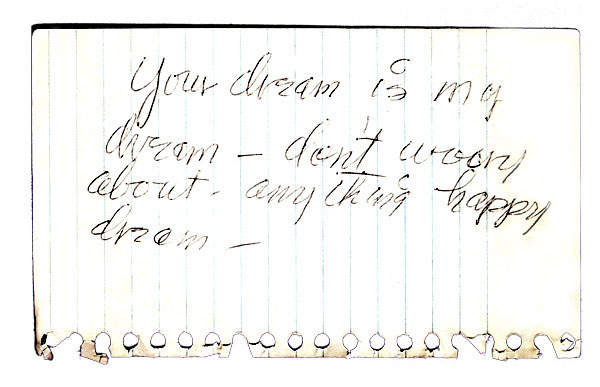
“Your Dream is my Dream. Don’t worry about anything. Happy Dream.”
What dream?
What was he telling us?
Then I remembered, Cheryl and I were in high school when we accidentally discovered that Dad was more than a hard working Japanese farmer. He was more than the explosive temperamental man that you just don’t mess with. He was a man who once had a dream.
Mom, Cheryl and I were cleaning his bedroom closet back at the old farmhouse.
The closet was stuffed with dad’s fishing poles and tackle, black rubber rain boots, a camel colored woolen coat that smelled like dusty mothballs.
“Oh look!” said Cheryl, then pulled out an old olive-drab army jacket.
“This is so cool! ” said Cheryl.
“You can have it if you want. Dad will never wear it,” said Mom.
Cheryl smiled as she wrapped the jacket around her and stuffed her hands in the side pockets. Somehow, the funky cute style seemed to fit. The army green color of the jacket complemented Cheryl’s olive-brown complexion, and her long black hair nicely.
“I’m going to wear this to school tomorrow,” she said, with a bright smile that lit up her face.
While Cheryl was admiring the jacket, I stumbled across a large canvas 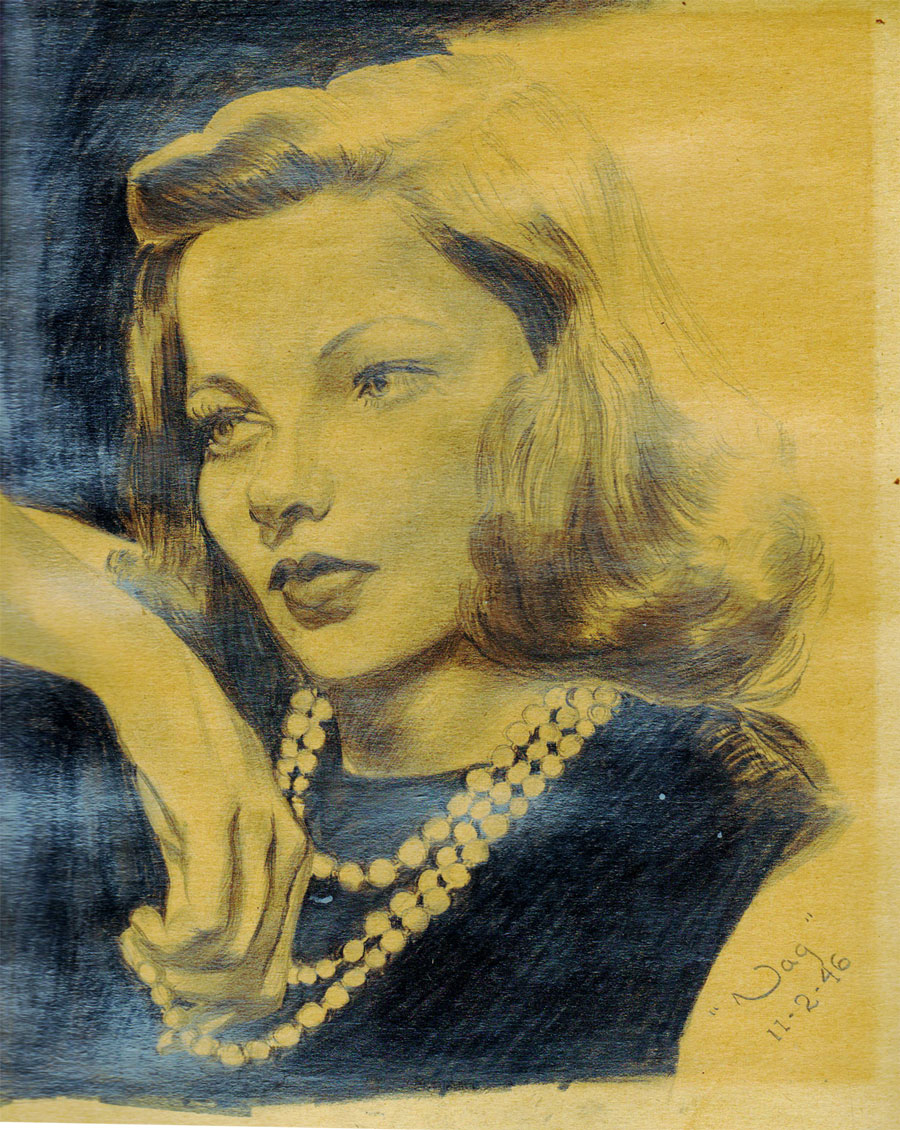 painting. Behind the painting was a detailed pencil drawing of a woman’s face. The lost and forgotten treasures were hidden behind the musty wool coats and the dust covered shoes that Dad never wore. I pulled out the painting, and the portrait then placed them on the bed. Vibrant colors of green, blue, violet and yellow feathers of a peacock contrasted sharply against the gold-orange background. Fine filaments of every feather were intricately painted. Yellow and green eyes looked back at us as we stood back and stared at the painting.
The pencil drawing showed every fine detail of the woman’s face. Every strand of hair and even her eyelashes were carefully drawn.
“Where did these come from?” I asked.
“Dad painted that,” said Mom.
“And he drew that portrait.”
“Really?” I said. “I didn’t know he could draw.”
Until that moment, the only art we had seen of Dad’s were the three-dimensional boxes he doodled while taking on the phone. He was always drawing boxes with a blue ball point pen, scribbling lines that formed the top, bottom, front, back and sides of empty boxes.
“He wanted to go to art school,” said Mom.
“He did?” said Cheryl.
“Yes he did. But then you kids came along and he had to raise a family. So he became a farmer with his brothers.”
Cheryl and I looked at one another, as if we both realized at that moment, that we had inherited our creative abilities from Dad. And Dad was working at a job he hated. Dad gave up his dreams, for us.
Dad was telling us not to give up on our dreams.
Was that why he was so angry? Were the boxes he subconsciously scribbled some kind of message possibly telling us that he felt trapped in a box he couldn’t get out of?
Dad and his brother’s were constantly arguing. Too often, Uncle Sam stomped into our house, leaving dirt clods behind him. I can still see him standing, in his typical uniform, a dust covered grey drab work shirt, tan safari hat and faded blue levi jeans. His mouth was pressed into a tight hard frown as he pushed out his chest and stood face to face with Dad.
“Nag ! #@!!! YOU! *&^6!”
Uncle Sam and Dad argued loudly in words we couldn’t understand. They argued in Japanese. When the argument was over, Uncle Sam stomped back out the door and slammed it behind him.
Something in the air had changed. I could feel it in my rattled nerves and the achey heaviness of my heart. It hurt my soul to see Dad belittled.
“Why don’t we all just move to Mexico,” Dad said, staring at the floor. “Then I could go fishing.”
Dad was our teacher, our mentor, our leader. Consciously or subconsciously Dad taught us much of what we knew. He taught us his fears, his hatreds, his beliefs. Everything he said and did was recorded in our subconscious minds as we were growing up. His behaviors became our behaviors whether we knew it or not.
As we discovered in Dorothy’s classes the subconscious mind is a tape recorder that plays back the behaviors of the people who surrounded us as we were growing up. These are the subconscious behaviors that end up running our lives.
I looked back on my life and realized, that for too many years, I too worked at a job I hated. I too, felt trapped. It wasn’t until I met Dorothy and learned to re-program my life that things began to change.
The beauty of the Gems of Excellence Integrations is that when done correctly we learn to overcome the subconscious programs. Something greater awakens within us. A higher intelligence of the authentic self is awakened. We can then tune into an inner hearing and seeing that we may know as intuition, insight, or epiphany.
It is this inner hearing and seeing that can guide us to the life our dreams.
What dreams?

Leave a Reply